web analytics
2010
03.17

BarretTime for March 17, 2010

This Saturday at the Bellaire Civic Center, the Houston Area Apple Users Group will be getting together for their monthly meeting. The Special Interest Groups will be meeting in corporeal form at nine that morning, with the main presentation being delivered via iChat by Peter Cohen, former MacWorld columnist. Peter will be talking about Aperture 3, a digital image editing and organizational package that has features not found in iPhoto. That presentation kicks off at 11:00. For details and directions to the Haaug meeting, surf to www.haaug.org.

If the thought of having a cheap networked file server at home makes you want to dance a jig, then this Saturday’s meeting of the Samba & Network Administration SIG at HAL-PC may be for you. Although there are several ways to share files among networked computers, the SMB/CIFS protocol is still king, if only for its ubiquity and ease of use. And if you’ve got an old PC and a few spare drives lying around, you can take advantage of SAMBA, a suite of programs for Linux and Unix that lets you host files cheaply and reliably from less than blazingly fast hardware. Samba turns 18 this year, and its latest 3.5.1 release hit the net a little less than a week ago. *You* should hit www.hal-pc.org for more info on this SIG as well as a full listing of their monthly events.

And today *is* St. Patrick’s Day. In addition to owing the Irish a debt for Celtic Music, Guinness and the animal series of books from O’Reilly and Associates, we should also give a nod to some early Irish geeks.

George Boole, 1815 to 1854, while technically an Englishman, was the first Professor of Mathematics at Queens College, Cork. While there, he developed his system of Boolean Algebra, which is one of the cornerstones of computer science today. ‘Bool’ or Boolean still exists in almost every typed programming language I am aware of. Actually, a bit of trivia for IRC would be “which modern computer programming language still in use today does *NOT* have a Boolean variable type?”

William Parsons, the Third Earl of Rosse, who also had the misfortune to be born English but soon found home in Ireland at Birr Castle, where, in 1885, he proceeded to build what was the largest telescope in the world at that time. The scope’s 72 inch mirror allowed Parsons to glimpse, for the first time, the spiral shapes of several galaxies.

(With a name like Parsons, I was hoping for something compiler related…)

John Tyndall, with a birthplace of County Carlow for the win, was a prominent Irish scientist who did pioneering work on the motion of glaciers, sound and radiant heat. He was also the first to offer a scientific explanation for “Why is the sky blue?” with explanations as to how light scatters in the atmosphere. He was also the first to explain how gasses in the atmosphere trap heat and keep the Earth warm. I wonder if Al Gore knows that the Irish discovered global warming. And lastly, he invented the ‘Light Pipe’ which later led to the development of fiber optics. So the Irish are taking the Internet back from Gore, too. Hopefully he has a green beer to drown his sorrows in this evening…

William Thompson. This is another one of those whose names you’ll know without knowing. So… William Thompson? Anyone? Maybe if I give out his Handle – Lord Kelvin aka First Baron Kelvin. So do we give the Irish credit for first use of a nick or handle? Possibly. Lord Kelvin introduced the absolute scale of temperature which starts at absolute zero, or zero degrees Kelvin. He was also closely involved with laying the first successful transatlantic telegraph cable under the sea between Ireland and Newfoundland in 1866.

Ernest Walton, Ireland’s only Science Nobel Laureate, helped build the first successful particle accelerator with John Cockroft at Cambridge, where they disintegrated lithium, or, as it is better known, splitting the atom, in 1931.

John Bell, born in Belfast, was a member of CERN. He’s responsible for the development of a set of equations known as Bell’s Inequalities that are of fundamental importance in quantum physics, and thus quantum computing.

And to make sure we have a lass among the lads, we have Jocelyn Bell Burnell, still living, as far as I know, of the Open University. She discovered Pulsars, or rapidly rotating neutron stars, in 1967, and continues to study them today.

That’s it for this bit of the BlarneyTime and that’s that for BarretTime.
2010
03.11

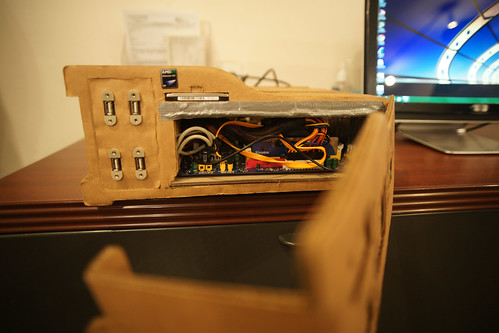
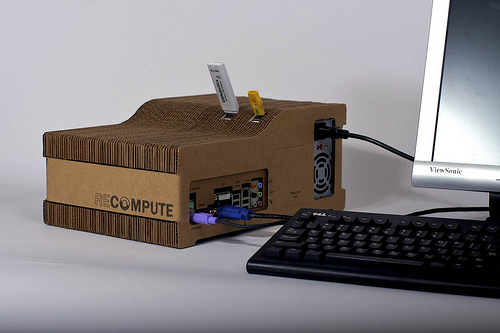
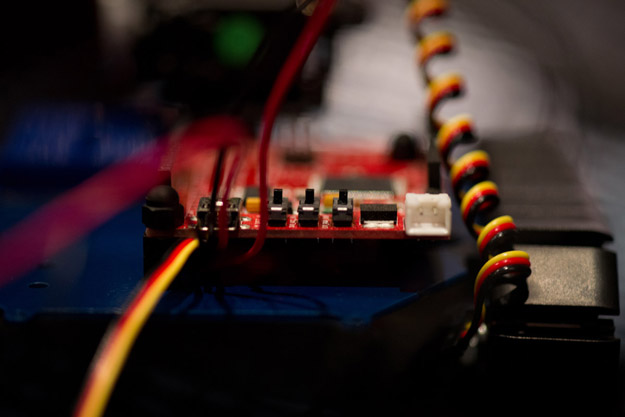
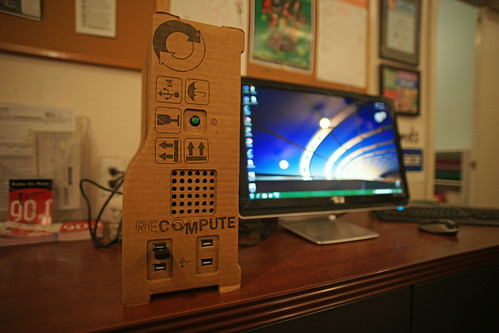
Tonight’s show featured an in-depth interview with Brenden Macaluso of Montoroso. Bendan is the creater of the “Cardboard Computer” officially known as “The Recompute

Brendan was kind enough to bring his creation to the station and spend some time with us before the show to explain the project.

Here are some pictures of The Recompute:

Recompute

Recompute

And here is a video shot by Dwight Silverman using QIK

Bendan joined us on the air for about 30 minutes beginning at about 8:30 pm CST and it was a GREAT conversation.

2010
03.08

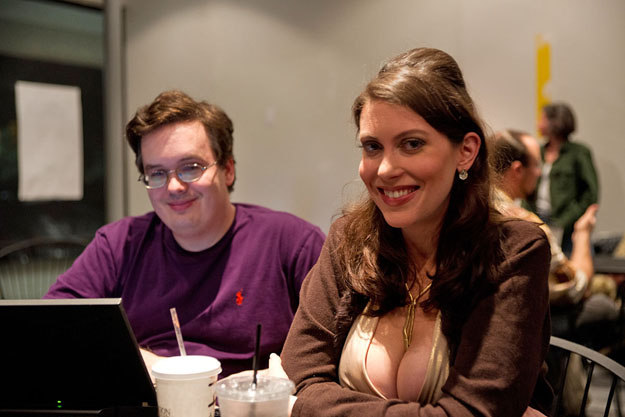
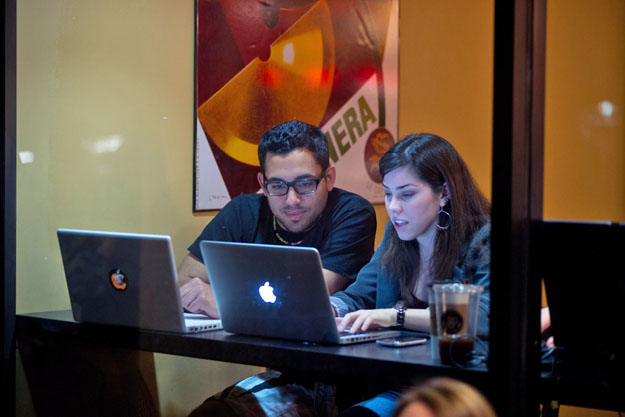
March Geek Gathering – The Photo Evidence

2010
03.04

Podcast for March 3rd, 2010

2010
03.01

BarretTime for March 3, 2010

Allright. First and foremost, thanks again to everyone who helped us make our goal in what was possibly the most painless on-air membership drive ever.

It was definitely a creative use of technology that went outside our normal channel to achieve our goal in a previously unheard-of time. It was an excellent hack, if you will. That’s hacking in its truest sense and not the nefarious activity that should probably be labeled as cracking these days.

The field of *hacking* has changed quite a bit over the last two decades. Gone are the days of pimply faced teens in their parent’s basements, war-dialing entire area codes and writing rudimentary shell scripts. These thirteen-year-olds have been replaced by thirty-somethings. Or maybe these thirteen-year-olds just grew up into thirty somethings.

Whatever the case, the “scene” is now an “industry” and the corporate term for these shenanigans is Information Security or InfoSec. (One definite perk to things going corporate is that most of the people in the industry can now afford digs outside of their parent’s domain.)

Information Security, for the most part, tends to be reactionary. AntiVirus vendors add virus signatures to their products only after the new virus has been spotted in the wild or otherwise detected by the vendor. The same goes for vendors of Anti-Malware and Anti-Spyware products. Anti-Spam tool kits also work along these principals, constantly improving their filters based on what is actually being seen in the real world.

In these arenas, it’s definitely a case of the bad guys leading the pack. In fact, the bad guys *often* find themselves on the cutting edge of technology. A great example of this is BotNets. It’s not uncommon to hear about BotNets that control hundreds of thousands or even millions of computers or nodes. To put that in perspective, the largest cloud based computing resources have, at most, just tens of thousands of nodes.

So it’s no surprise that the Bad Guys controlling these networks (that are often powers of ten larger than their corporate counterparts) have some pretty advanced technology to maintain control of these nodes and pass them instructions or workloads. These interfaces are called Command and Control structures and are just one of the topics covered in the Security B-Sides San Francisco Talks that took place yesterday and today on the West Coast.

B-Sides (think mix-tape) is a community driven unconference built for and by information security community members. The goal is to expand the spectrum of conversation beyond the traditional confines of space and time. It creates opportunities for individuals to both present and participate in an intimate atmosphere that encourages collaboration. Its an intense event with discussions, demos and interaction from participants. It is where conversations for the next-big-thing are happening. If you’re familiar with the BarCamp format, you already know what these guys are about…

They’ve been streaming all of the talks via Qik the last two days, and while they are no longer live, they have been staged online for your viewing. Hit www.securitybsides.com and follow the B-Sides San Fran link or just surf directly to www.pathsecurity.com/pathtv/ for full videos.

While San Francisco is a little far away, Austin is not. The B-Sides Austin conference is happening Saturday, March 13th, in Austin, Texas, at the Norris Conference Centers. Titled, “BSides Austin 2010: Keep Security Weird” the one day event kicks of at 10:00 AM and culminates in an evening after-party called “Hackers on a Duck”. The group has reserved the Austin Cosmic Cowboy Tour for an evening of mobile hacking and drinking. The conference is free, and the Hackers on a Duck outing has been subsidized to the point where it’s just a few bucks to get on the duck. As with most water foul, seating is limited, so make your reservations now. There should be plenty of room on dry-land for all of conference attendees, so not to worry. Hit www.securitybsides.com/BSidesAustin for a complete run-down of the stationary event.

A little closer to home is our own open conference, covering all things tech: the March Geek Gathering. This is the Spring Edition, when the stench of “love of electronics” permeates the air. The downside to all this is that it’ll probably be too chilly to hang out on the outside patio, meaning that you may have to go home and explain why you smell like electronic love to a loved one.

Those who are unattached can come out in search of someone with which to bump, dock, or possibly practice what’s on the front of one of phliKtid’s home-crafted tee-shirts. Though I’d like to be the moral compass on this and say that you probably shouldn’t do that with someone you’re not twitterpated with. That’s a Bambi reference, by the way, not a nod to the fail whale.

Things get going this Friday night at seven PM at the Coffee Groundz in Midtown Houston. If you don’t see any geeks gathered inside, just follow the twinge of tech in the air out the door and to the right where you’ll find the Geek Gathering overflow room. I’m not sure if this was an upsell, or if JR’s just hiding us from the rest of his clientele, but it’s definitely been a lot of fun the last few months. There’s plenty of table space, so feel free to bring whatever interests you. We’ve had things from very high tech non-functioning robot rovers to very low tech yet
extremely functional toboggan caps built on site, so feel free to push the envelope in either direction or just aim for somewhere in between.

The Coffee Groundz offers free WiFi, and non-free food, beer, spirits and wine. Surf to www.coffeegroundz.net or just hit up our own website at www.geekradio.com for details and directions to Friday’s event.

That’s it for your Intro to InfoSec and that’s that for BarretTime.
2010
03.01

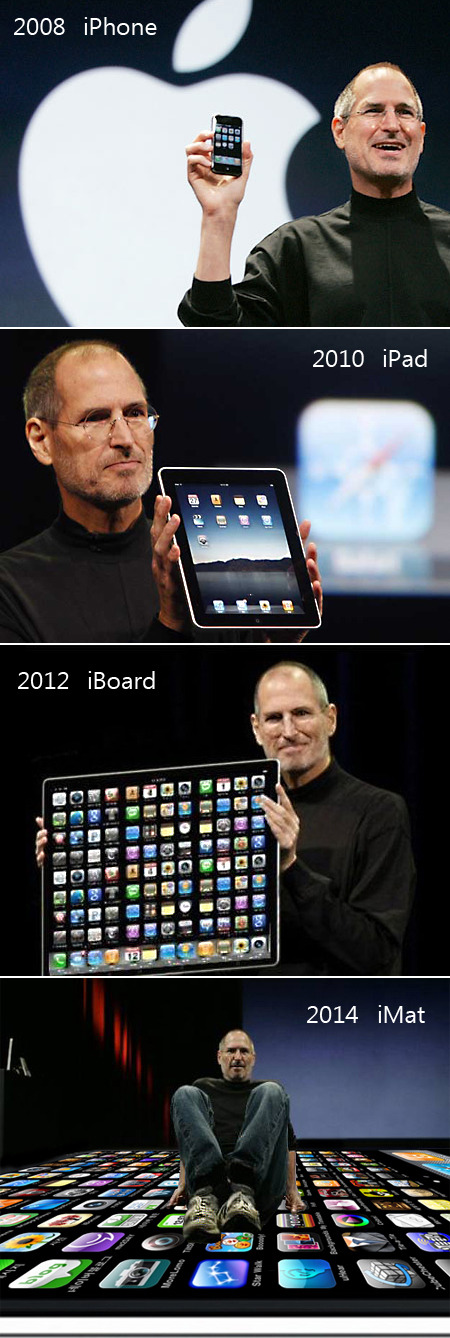
The Future Of Apple

Via Be Geek

2010
02.25

J.R. Cohen in the KPFT Studios

Even though this was a fundrasing episode, we didn’t have to do any fundraising as we met our $1,500 goal prior to airtime. This was due to a generous matching pledge by a listener named Ian and the efforts of our fans via Twitter and Facebook.

2010
02.24

Thank you for calling KPFT

During the KPFT pledge drives, Technology Bytes is responsible for raising a certain amount of money toward the overall station goal. This usually equates to about $1,500 during each show we broadcast during the drive.

We have always said that once we make our goal for any given episode we’ll stop begging for money and just do a regular broadcast.

If you are a regular listener of Technology Bytes you may recall that during the last KPFT pledge drive, we raised our $1500 goal in the first 45 minutes. This was unprecedented, and obviously very exciting for everyone involved. It also meant that we had a one hour and fifteen minute oasis of non-fundraising programming in the middle of the KPFT pledge drive.

Fast forward to the current pledge drive. Last week we met our $1,500 goal, but it took us up to the final minutes of the show to do it. This is pretty common. In looking ahead to the second fundraising episode we pretty much expected the same thing. That is, until we got the following e-mail:

I would like to make a significant donation to your show. I notice that
sometimes large on-air donations are followed by fallow periods. I wonder
how best to maximize my contribution. I’m thinking that a matching
contribution until the show’s record completion time (45 mins?) might work
well. So I would contribute $750 in the record breaking scenario, and less
otherwise. What do you think?

E-mail were exchanged to validate the claim and we’re pretty confident that this is a legitimate offer.

So basically, this listener will match up to $750 in pledges that come in under the 44 minute mark to help us meet our $1,500 goal AND break the record.

That means if we raise $750 in under 44 minutes we’re done for this fundraiser. And it doesn’t have to go down to the wire, either. If we raise $750 in the first 10 minutes, we’re done.

OOOH! Here’s a thought. Let’s take this one step further!!! If you call 713-526-5738 RIGHT NOW and make your pledge and specifically state that it is for Technology Bytes, we might make our goal before the show even begins. But you have to make sure the volunteer that answers the phone knows you are pledging for Technology Bytes and not for the current show so the amount will be credited to our show.

Another option, make an online donation!


Make your pledge NOW and donate whatever you can. We can do this and we can do this quick.

2010
02.21

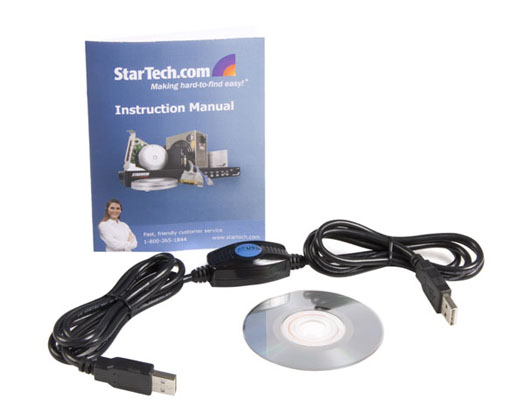
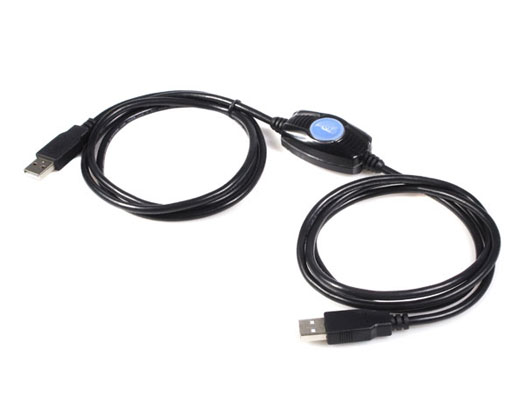
Windows 7 Cable from StarTech

We get a lot of e-mail and phone calls from people who are buying new computers with Windows 7 and the most common question we’re asked is “How do I transfer my files and data from the old compute to the new one?”

If you are not connected to a network or you find setting file sharing and so forth just a little too intimidating, Startech has an easy to use and very affordable option called the USB Easy Transfer Cable.

Simply connect one computer to the other using your USB ports and transfer files easily from one computer to the other at speeds up to 480Mbps.

2010
02.17

BarretTime for February 17th, 2010

Allright.

We’ve got one lone event on the radar this weekend… This Saturday, February 20th, Bob, “Dr. Mac” Levitus, will be giving his State of the Mac Address to the attendees of the February Houston Area Apple Users Group. Special Interest Group meetings kick off at nine am, Dr. Mac’s address happens around eleven, and things are wrapped by two. Hit www.haaug.org to get SIG details and driving directions to the Bellaire Civic Center, located at 7008 South Rice Avenue in Bellaire, Texas.

I’m curious if Dr. Mac actually gives his talks wearing blue scrubs over what I can only assume is a black Genius t-shirt and a stetho-mouse: half-mouse, half-stethoscope. I assume that he uses the device to deduce whether you are, at heart, a Mac or a PC. If the pic on haaug.org *was* PhotoShopped, I don’t want to know. I’d prefer to live in a world where the stetho-mouse exists, even if that world is completely out of touch with reality. Like the one Google just moved to.

In all fairness, I think that everyone enjoys the occasional break from reality. It’s why people still watch Star Wars Episode IV: A New Hope. It’s probably why Lucas made episodes one through three. It’s also probably why a lot of you partake in the immersive and often complex worlds created by Massively Multiplayer Online Role Playing Games. Things like World of Warcraft, City of Heroes, EVE Online and arguably Second Life. The problem with a few of these pass times is that the in-game rewards are often based on time spent playing the game. This usually takes the form of hunting around for money or doing various repetitive things to gain those precious experience points. Of course, real life money can always be converted into virtual riches, even if you have to go through some fairly shady sources to do so.

Tonight’s big announcement is that Technology Bytes has its own MMO-RPG that lets you compete with other players to earn real-world
rewards. The game is so completely immersive that, for many, it is indistinguishable from the real world. To play, you simply surf
to www.geekradio.com. That’s it.

While you may not realize it, you are now playing Technology Bytes Farm Town. To start the game, you simply go around the house looking for loose copper and silver coins. That’s right, your first job is a copper farmer. As a level one noob, you’ll want to start by farming your immediate area. Your own pockets, under the cushion your sitting on, and so forth. Once you have a feel for the game play, you can widen your search to other rooms and immediately outside your home. Be careful when farming in the street, though, as Tech Bytes Farm Town doesn’t let you respawn. Once you’re out, you’re out. Which is probably why we should get a Tech Bytes Farm Town Last Will and Testament up on the site. (I’ll get with the developers…)

When you’re ready to begin questing, you may search friend’s houses, the coin return slots of pay phones (if you can still find them) and vending machines located in public areas. When you’ve amassed a total of $40.00 in change, head back to where you launched the game, and click on the Donate button on the left of the game UI. Once you have submitted your Tech Bytes Farm Town Copper, you will be rewarded with the title of “Member” in the Guild of Listener Supported Radio.

Now, I’m not a fan of running in-game cheats or hacks, but there is a way you can control more than one virtual player or avatar at a time. In games like World of Warcraft, this is known as multi-boxing. To do so in Tech Bytes Farm Town, simply open a new browser window, get it side-by-side with the existing geekradio.com window, and surf to www.technologybytes.com. Now you’re multi-boxing; now you’re elite.

Of course, you can always just skip all the farming & questing and just donate real life money without the need to go through any shady sources to do so. And if you choose to pledge during a guild meeting night, like right now, you can submit your gold through our in-game voice chat system. It’s a little like Ventrillo and it’s called the telephone. Just pick it up and dial 713.526.4000 to get online with one of our game operators now.

Well, that over half of that for our own pledge farming quest, and that’s it for BarretTime.